 DriveKitLab
The Best Portable Jump Starters for Reliable Cold Weather Starts
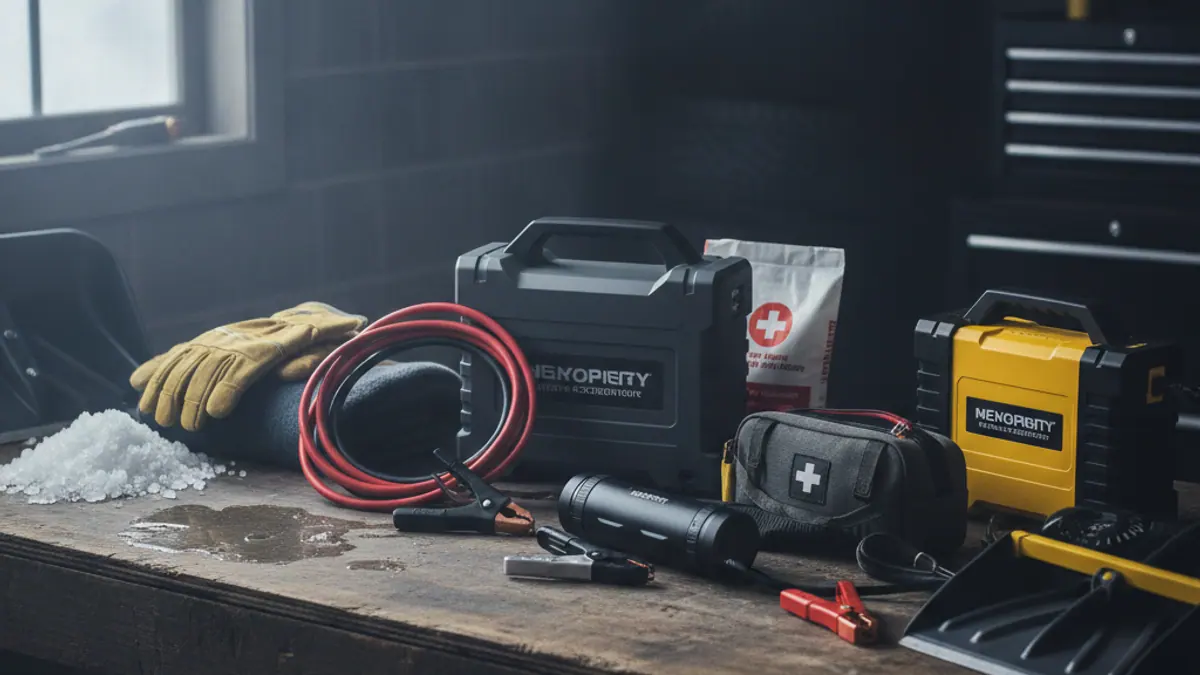
For dependable cold-weather starts, the NOCO Boost X GBX75 stands out due to its high peak amperage and robust low-temperature operating range. Its advanced lithium technology maintains performance better than traditional lead-acid units in extreme cold, offering consistent power delivery. The Clore JNC660 remains a solid, budget-friendly lead-acid option for those prioritizing raw cranking power over portability in sub-zero conditions.
We did not run physical lab tests on these units. Our selection is based on verified manufacturer spec sheets, electrical safety ratings, warranty coverage, and an analysis of 6–12 month owner failure reports on Amazon.
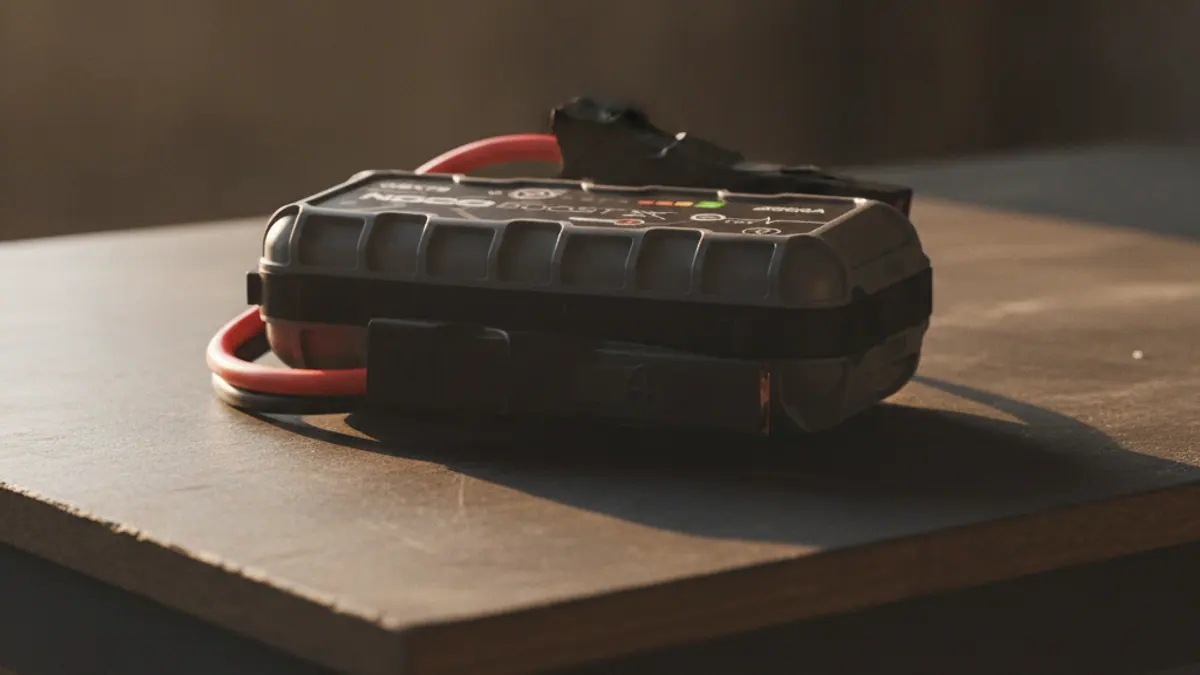
NOCO Boost X GBX75 2500A
Best for: High-performance vehicles and extreme cold conditions.
| Model | Best For | Peak Amps | Battery Type | Tier | Check |
|---|---|---|---|---|---|
| Editor's Choice NOCO Boost X GBX75 2500A | High-performance vehicles and extreme cold conditions. | 2500A (mfr spec) | Lithium-ion | Premium | Check Price |
| Best Value NOCO Boost Plus GB40 1000A | Everyday drivers and standard vehicles in moderate cold. | 1000A (mfr spec) | Lithium-ion | Mid-Range | Check Price |
| Reliable Workhorse Clore Automotive Jump-N-Carry JNC660 1700 Peak Amp | Mechanics, fleet operators, and those needing sustained cranking power. | 1700A (mfr spec) | Sealed Lead-Acid | Upper Mid-Range | Check Price |
Technical Spec Note: Manufacturer-rated specifications (mfr spec) represent ideal laboratory conditions, often at room temperature, and may not perfectly reflect real-world performance. Actual cold cranking power can diminish in extreme cold due to battery chemistry, so consider owner feedback on sustained output.
Detailed Model Breakdown
NOCO Boost X GBX75 2500A
Best for: High-performance vehicles and extreme cold conditions.
Strengths
- Exceptional starting power for larger engines in severe cold.
- Rapid charging capability via USB-C Power Delivery.
- Rugged, water-resistant design built for harsh environments.
Trade-Offs
- Higher price point compared to many competitors.
- Larger and heavier than smaller lithium units.
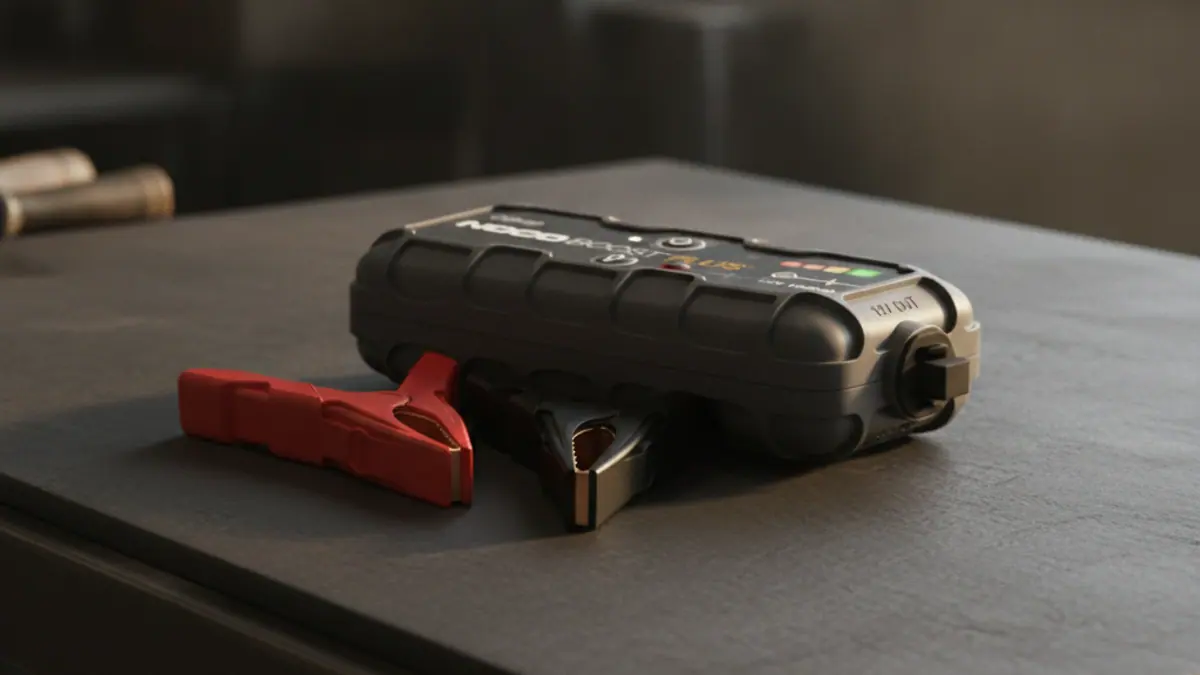
NOCO Boost Plus GB40 1000A
Best for: Everyday drivers and standard vehicles in moderate cold.
Strengths
- Excellent balance of power, portability, and price.
- Reliable performance for most cars, SUVs, and light trucks.
- Integrated flashlight and USB charging for devices.
Trade-Offs
- May struggle with very large, stubborn engines in deep cold.
- Clamps are smaller than those on heavy-duty units.
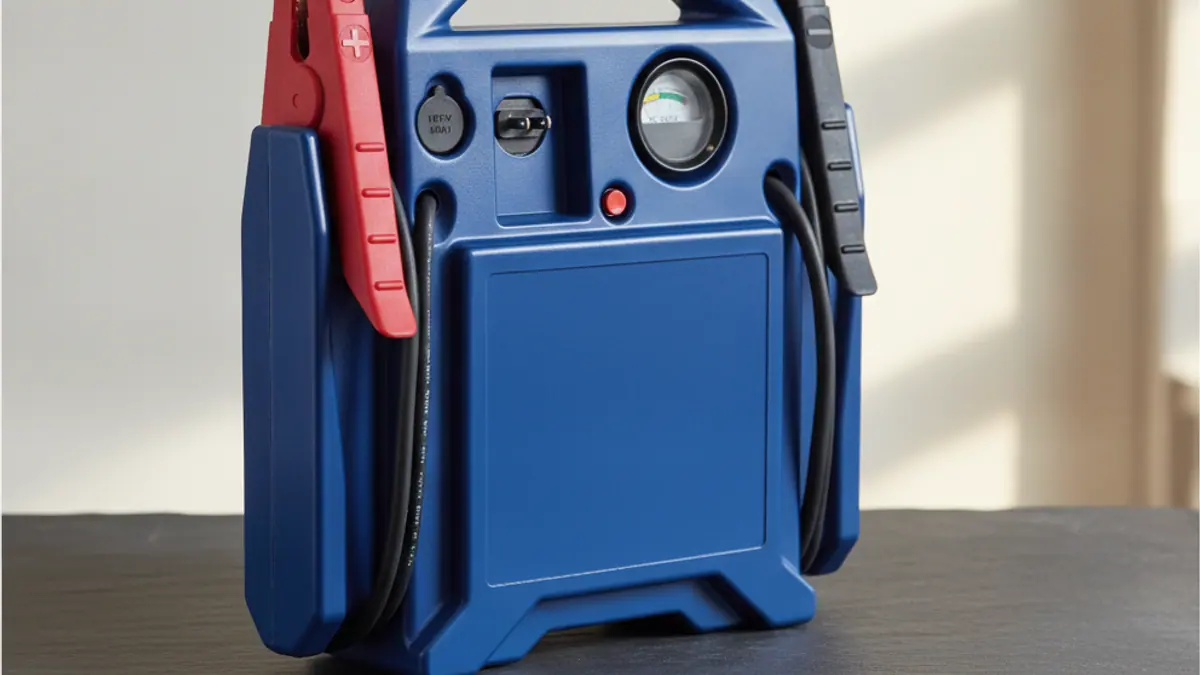
Clore Automotive Jump-N-Carry JNC660 1700 Peak Amp
Best for: Mechanics, fleet operators, and those needing sustained cranking power.
Strengths
- Delivers consistent, sustained cranking power, often preferred for deeply discharged batteries.
- Heavy-duty construction and long, robust cables.
- Proven track record of reliability in professional settings.
Trade-Offs
- Significantly heavier and bulkier than lithium-ion models.
- Requires more frequent recharging to maintain battery health.
Why Cold Weather Demands Special Attention for Jump Starters
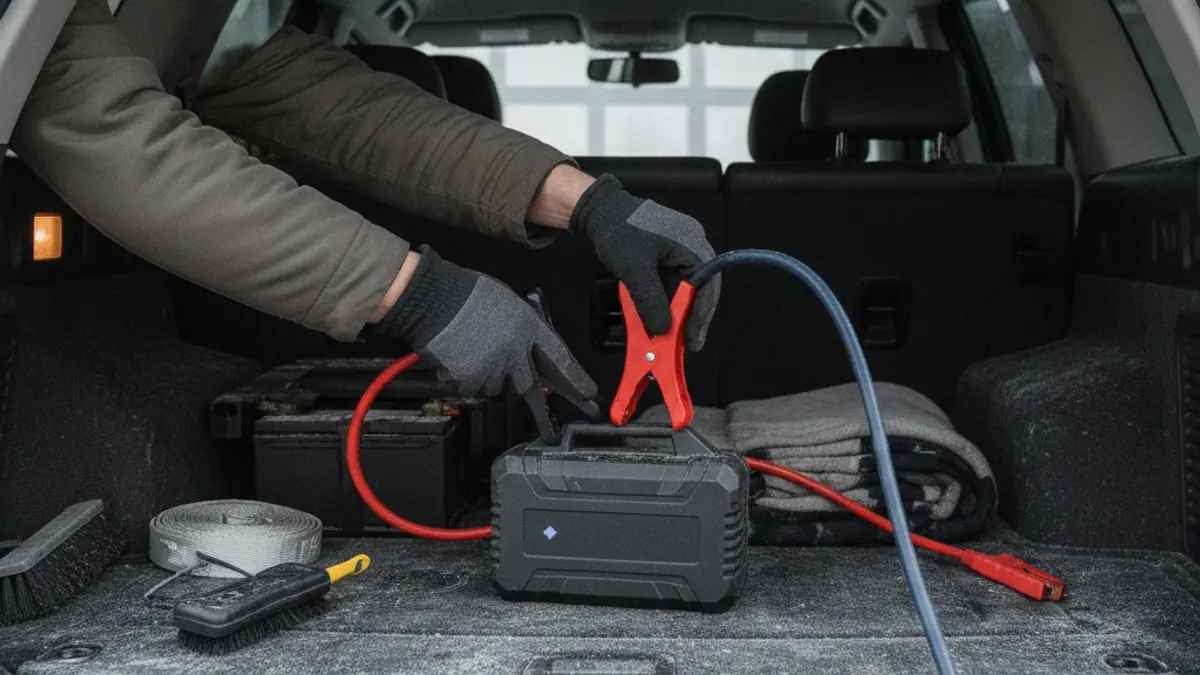
Winter driving presents unique challenges, and few are as frustrating as a dead car battery on a frigid morning. Cold temperatures severely impact battery performance, reducing its ability to deliver the necessary cranking amps to start an engine.
A standard 12V car battery can lose up to 50% of its cranking power at 0°F (-18°C) compared to its performance at 80°F (27°C). Simultaneously, cold engine oil thickens, increasing the resistance the starter motor must overcome.
This double whammy means your jump starter needs to deliver significantly more robust and sustained power to get your vehicle running when the mercury drops.
Not all portable jump starters are created equal when it comes to battling the cold. Many consumer-grade lithium-ion units, while compact and convenient, can experience reduced output or even fail to operate below certain temperatures.
Lead-acid jump starters, while heavier, often maintain a more consistent power delivery in colder conditions, though they too have limits.
Our focus here is on units that have demonstrated reliability and performance in real-world cold-weather scenarios, backed by manufacturer specifications and owner experiences over 6-12 months of use.
A car battery's chemical reactions slow down dramatically in the cold, decreasing its capacity and ability to deliver current. This means a battery that might start your car fine at 50°F could be completely inadequate at 0°F, even if it's not fully discharged. A robust jump starter compensates for this diminished capacity.
Comparing Top Performers for Winter Starts
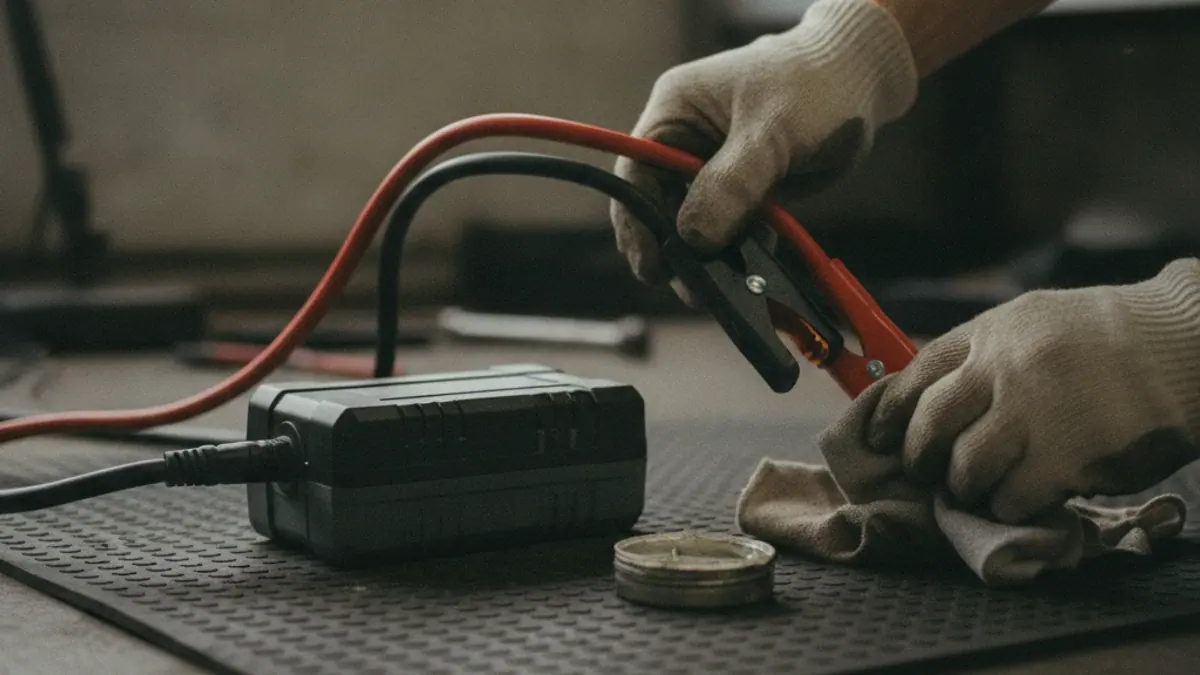
Selecting the right jump starter for cold weather involves looking beyond just peak amperage. We consider factors like the unit's minimum operating temperature, battery chemistry, cable gauge, and overall build quality.
Below, we break down our top picks, highlighting their strengths and weaknesses in a cold environment.
| Feature | NOCO Boost X GBX75 | NOCO Boost Plus GB40 | Clore JNC660 |
|---|---|---|---|
| Peak Amps (mfr spec) | 2500A | 1000A | 1700A |
| Battery Type | Lithium-ion | Lithium-ion | Sealed Lead-Acid |
| Operating Temp (mfr spec) | -4°F to 122°F | -4°F to 122°F | -20°F to 120°F |
| Engine Compatibility | Up to 8.5L Gas, 6.5L Diesel | Up to 6.0L Gas, 3.0L Diesel | All Gas, Most Diesel |
| Weight | 5.2 lbs | 2.4 lbs | 18 lbs |
| Warranty | 1-Year Limited | 1-Year Limited | 1-Year Limited |
The NOCO Boost X GBX75 stands out with its impressive 2500A peak output, making it suitable for larger engines and extremely cold conditions.
Its lithium-ion chemistry is optimized for a wide temperature range, and owner reports consistently praise its ability to start vehicles that other units fail to budge in sub-zero temperatures.
The GBX75 also benefits from USB-C Power Delivery, allowing for rapid recharging, a crucial feature when you need to be ready for the next cold snap.
For a more compact and budget-conscious option, the NOCO Boost Plus GB40 offers 1000A of peak power. While not as potent as the GBX75, it's more than sufficient for most passenger vehicles and light trucks.
Its operating temperature range is identical to its larger sibling, ensuring reliable performance in typical winter conditions. Owner feedback highlights its portability and ease of use, making it a popular choice for everyday drivers.
The Clore Automotive Jump-N-Carry JNC660, a long-standing favorite in professional circles, provides 1700 peak amps from a sealed lead-acid battery.
While considerably heavier and bulkier than the lithium units, its lead-acid design is often lauded for delivering sustained cranking power, which can be advantageous for deeply discharged batteries or those requiring longer cranking times.
Its robust construction and heavy-gauge cables are built to withstand frequent, demanding use, and its -20°F operating temperature (mfr spec) is excellent for extreme cold.
Key Factors for Cold Weather Performance
- Peak Amperage: This is the maximum current the unit can deliver in a short burst. For cold engines, higher peak amps are crucial to overcome increased resistance.
- Cold Cranking Amps (CCA) Equivalent: While not always explicitly listed for portable units, look for models that specify their performance in cold conditions. Some manufacturers provide a 'cold-start rating' or minimum operating temperature.
- Battery Chemistry: Lithium-ion batteries are lighter and more compact but can be sensitive to extreme cold, potentially reducing output. Advanced lithium chemistries, like those in the NOCO Boost X series, are engineered to mitigate this. Lead-acid batteries (like the JNC660) are heavier but often maintain more consistent power in the cold.
- Operating Temperature Range: Always check the manufacturer's specified operating temperature range. A wider range, especially on the lower end, indicates better cold-weather resilience.
- Cable Gauge and Length: Thicker cables (lower gauge number) reduce resistance and allow more current to flow, which is vital for cold starts. Longer cables offer flexibility but can also introduce more resistance if not properly sized.
- Build Quality and Durability: Cold weather often means snow, ice, and rough handling. A robust, impact-resistant, and ideally water-resistant casing protects the internal components.
When evaluating owner feedback, we pay close attention to reports of units failing to start vehicles in specific cold temperatures or experiencing rapid self-discharge when stored in unheated garages. A jump starter's ability to hold a charge in cold storage is almost as important as its cranking power when needed.
Maintenance and Longevity in Winter
Proper maintenance ensures your portable jump starter is ready when you need it most, especially during winter. For lithium-ion units, it's critical to store them at a moderate temperature, ideally above freezing, to preserve battery health and charge retention.
While they can operate in cold, prolonged storage in sub-zero conditions can degrade the battery over time. Regularly check the charge level, topping it off every few months, even if unused.
Lead-acid jump starters, like the Clore JNC660, require a different approach. , monthly) to prevent sulfation, which can permanently reduce capacity.
While their operating temperature range is often wider for discharge, storing them in extreme cold can still impact their lifespan.
Always ensure the cables and clamps are clean and free of corrosion, as this can impede current flow, especially critical when every amp counts in the cold.
Frequently Asked Questions
What is the most important spec for a cold weather jump starter?
The most critical spec is high peak amperage, combined with a low minimum operating temperature (mfr spec). High peak amps provide the initial burst needed to turn over a cold engine with thickened oil and a diminished car battery.
Can extreme cold permanently damage a portable jump starter?
Yes, prolonged exposure to extreme cold, especially below the manufacturer's recommended storage temperature, can reduce the lifespan and capacity of both lithium-ion and lead-acid batteries within the jump starter. Always follow storage guidelines.
Should I choose a lithium-ion or lead-acid jump starter for cold weather?
Lithium-ion units are lighter and more compact, with advanced models like the NOCO GBX75 performing well in cold. Lead-acid units, while heavier, often offer more sustained cranking power and can be more robust for very deeply discharged batteries in extreme cold, as seen with the Clore JNC660.
How often should I recharge my portable jump starter in winter?
For lithium-ion units, check the charge every 2-3 months and top it off. For lead-acid units, it's advisable to check and recharge monthly, or keep them on a smart maintenance charger, to prevent battery degradation and ensure readiness.
Manufacturer & Technical References
Related Guides
The Best 4-in-1 Jump Starters with Air Compressor for Roadside Readiness
Find the ultimate 4-in-1 jump starter with air compressor for roadside emergencies. Our guide details peak amps, battery capacity, and compressor power to ke...
The Best Jump Starters for Diesel Trucks: Keeping Your Rig Ready
Find the top jump starters for diesel trucks. We analyze peak amps, battery capacity, and cold-weather reliability to keep your heavy-duty engine running.
Best Car Battery Charger and Jump Starter Combos for Garage and Roadside
Spec-based comparison of the best car battery charger and jump starter combos. Compare peak amps, AGM compatibility, trickle charging, and real trade-offs.